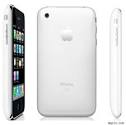
First impressions: Apple’s iPhone 4S

iphone4sboxThe first thing that strikes you about Apple’s latest smartphone is how it is virtually indistinguishable from its previous model. the iPhone 4S is a dead ringer on the outside for the iPhone 4.

But once you start using it, the differences are clear, and in some cases dramatic. It’s noticeably faster overall, and the Safari Web browser is jaw-dropping in its speed.

The much-vaunted Siri is interesting, but not quite as impressive as I’d hoped. while the feature – which combines voice recognition with artificial intelligence in to a “digital assistant” – is interesting and has potential, I can see why Apple labels it a “beta.”

I got the opportunity to play with a black, 16-gigabyte iPhone 4S for a couple of hours this afternoon. while that can’t compare to using it day-to-day, I got a good feel for the differences between it and the iPhone 4, which I use now.

Here are some initial thoughts:

• the iPhone 4S has the same A5 processor, developed by Apple, as the iPad 2. As a result, it’s more responsive than the iPhone 4, something you notice almost from the start. Apps open quickly, and tasks are performed almost instantly.

For example, iPhone 4 owners know that the Maps application can take some time to draw a calculated route, even after getting the data it needs from the network. here, routing happens almost immediately.

• the phone’s impressive performance is overshadowed by that of the mobile Safari Web browser, which simply blew me away. iPhone 4 and 3GS owners know that the Safari can be balky, particularly as pages are still loading, and if they have lots of images and javascript.

The 4S’s browser scrolls through these pages very smoothly, more like a desktop than a mobile browser. Note that this same browser is included in the iOS 5 upgrade available to iPhone 3GS and 4 owners, and it’s also faster on those phones . . . but not like this. Whoa.

I ran a Sunspider test on my iPhone 4 and the 4S. the iPhone 4 came in with a result of 3336, while the 4S clocked in at 2206 (smaller is better).

• the 8 megapixel camera yields impressive images, though I didn’t have time to test it in all kinds of lighting conditions. you can see the difference in the two shots of this purse below. the one on the left is from my iPhone 4, the right is from the 4S. the 4S image has more detail, though I think the color is a little truer in the iPhone 4 image.

4purse  purse4s

• I linked the iPhone 4S to the iCloud account I’d set up with my iPhone 4, iPad and Macs. When I did, all my contacts and browser bookmarks appeared on the 4S, without me having to do anything. When I took photos on the 4S, theyt quickly appeared in the Photo Roll on my iPhone 4.

What was particularly interesting was how iCloud helped with messaging. I sent my lovely wife a few text messages using Siri on the 4S, and when I looked in my Messages app on my iPhone 4, those text messages – along with her replies – were there, too.

Bonus: They also showed up in the new iOS 5 Messages app on my iPad.

• Because this was an AT&T iPhone 4S, I was anxious to see how well it did on the telco’s HSPA+ network. Apple and AT&T claim it’s twice as fast as traditional 3G phones, but I didn’t see that. Data connections just outside the Chronicle downtown were about what I’d expect for 3G – around 2.6 Mbps down and just under 1 Mbps up. I walked a block away and get slightly better download speeds – about 3.5 Mbps – but nowhere near the 14-Mbps the 4S is allegedly capable of.

I hope to try another 4S around town in the future to see what kind of speeds I get.

• and then there’s Siri. I really had high hopes for this feature, and while I won’t say they were dashed, it’s obvious this is a work in progress.

Siri worked quite well when I stuck to very basic tasks. I could tell it to send a text message, look for restaurants, find movie theaters, check the weather. Siri understands context, so if you ask for more information without being specific, it presumes what you mean from your previous queries and answers accordingly.

What can throw Siri, though, is if you shift gears. For example, I asked for directions to a location in Houston, and it gave me that. I then asked Siri “how far away is the Andromeda galaxy?”, hoping to see its connection to the Wolfram-Alpha knowledge engine. however, because I’d just asked about street directions, Siri told me how to get to something called Andromeda nearby.

andromeda

The Andromeda I meant, of course, is much farther than Harwin Drive . . .

Siri would be great for hands-free uses in the car – sending and receiving texts, playing music, getting directions. But Apple’s clearly got more work to do.

Before I tried the iPhone 4S today, I was considering buying one, just for Siri. But using it brought me down to earth. I’ll stick with my iPhone 4 for now, and figure Siri will be ready for me with next year’s iPhone 5.

Buying iPhone Accessories and Another Accessories Online @ RabbiBurton.com

Buying iPhone Accessories and another Accessories Online

When shopping online, people drive like them to receive their online store. it is not only these items. buy online store to get the desired accessory as the iPad, iPod accessories, iPod touch accessories, iPhone 4, iPhone 3G and iPhone 3GS cases and other cases of similar projects were a huge number of visits. why do so many people online, they must buy iPhone accessories and ?

Use to buy iPhone accessories and mobile phone accessories online market first advantage is a huge choice of products available. when you buy your iPhone accessories are available on the number of fixed items. But when it comes to cell phone accessories available, you may not even know of the myriad options. not only that, when you visit an online store, you like iPad accessories, iPod accessories, iPod touch accessories, iPhone 4, iPhone 3G and iPhone 3GS case case of other projects – the list is endless.

Most people now know how to buy electronics online. for example, you need to buy the iPhone 4 or cases for iPhone 3G . All you need to do is to guide your computer and can be connected to the Internet. This is your start. if you know a certain well-known online shopping site is a good idea. you can open the site in your browser. On the other hand, even if you do not know any specific site, you have search engines to help you. find some popular online shopping site, and click on the link in the search engines to access them. Visit TradeTang.com.

Once you find the product you want to buy some, you can now use the “more” option. More options will help you more iPhone accessories or cell phone accessories side by side. you can have a model look, to see the price and other specifications, and choose your project requirements.

You will usually get in the virtual store in the lower price of the iPhone accessories and cell phone accessories. Retail stores have been delivered from the manufacturer to include the cost of the project and store project-related costs. Virtual stores do not need to transport or store goods. upon receipt of your order, they notify the appropriate dealers and project delivery to you. Discount online store also regularly run weekly, you can use these preferential benefits.

The world relies heavily on the Internet supply of the project itself. even monthly grocery purchase online, it is no wonder , a lot of people prefer to buy iPhone accessories and cell phone accessories online market.

Source: ArticlesBase.com

Latest Slideshows

One million iPhone 4S devices were sold in the first 24 hours of pre-sale orders, compared with 600,000 iPhone 4s in 2010. That makes iPhone 4S Apple’s best product launch ever.

When iPhone 4S hits the shelves later this morning, buyers can look forward to Siri, the intelligent voice recognition software that looks to be iPhone 4S’s crowning glory. Additionally, iPhone 4S boasts a faster processor, improved camera and battery life, all new apps and full Twitter integration.

Apple founder and iPhone inventor Steve Jobs died Oct. 5 only one day after iPhone 4S launched, and that may have inadvertently spurred more sales. despite the fact that Samsung, arguably Apple’s number one competitor, has multiple lawsuits pending against them, Samsung even delayed announcing their new smartphone this week in honor of Jobs.

It was a classy move, but one that might not win Samsung enough support to become the top smartphone maker, as the iPhone 4S pre-order numbers indicate. iPhone 4S ships today and the wait is over. many were hoping for a totally redesigned iPhone 5 with a larger display, but instead got the better-on-the-inside iPhone 4S. start the slideshow to check out the top 10 reasons why iPhone 4S is worth buying.

Let us know in the comments if you think iPhone 4S is a winner or if Apple is now a year behind Android smartphones.

MUST READ: iPhone 4S With iOS 5 and Siri Begings Shipping Today: should Rivals Be Afraid?

MUST READ: iPad Facebook App Released with Bugs

Best Buy to offer full iPhone 4S lineup

Best Buy is offering the iPhone 4S in all models across all three carriers.

(Credit:best Buy)

Apple’siPhone 4S has already secured a home for itself on the shelves at best Buy.

The retail chain’s iPhone 4S Web page shows that it will sell all three flavors of the new phone (16GB, 32GB, and 64GB) at the standard retail prices of $199, $299, and $399, respectively, and in both black and white. best Buy will also offer prospectiveiPhone 4 buyers a choice among the three major carriers–AT&T, Sprint, and Verizon Wireless.

Preorders started last Friday, while the phone itself will go on sale at best Buy stores and other outlets this coming Friday, October 14.

But the retailer is also offering a carrot stick to customers who’d be perfectly happy with an older model iPhone.

An 8GB iPhone 4 can be picked up for $99 with a two-year contract. the 8GB 3GS will be free on contract, the company confirmed, even though Best Buy’s Web page currently shows it as selling for $49.

Though the iPhone 4S disappointed many who were eagerly anticipating aniPhone 5, that hasn’t stopped people from ordering the phone in droves. First-day preorders hit a record of 1 million, compared with 600,000 for the iPhone 4. Sprint sold out of the 16GB iPhone 4S only a few days after the preordering started.

A best Buy spokesperson told CNET that existing stock of the iPhone 4S will first be used to fill preorders.

“While we don’t disclose sales numbers, inventory at best Buy will be used to fulfill preorders first on Friday,” the spokesperson explained. “After all preorders at the store have been filled they will be available to customers without a preorder. Inventory varies market to market, store to store–to preorder today customers can visit their local best Buy or best Buy Mobile.”

Best Buy joins retail rival Target in selling the new phone. but Target is trying to lure in customers by offering a credit for those who trade in their iPhone 4 or 3GS for the iPhone 4S.

Updated 4:45 a.m. PT with information from best Buy.

Notes on the iPhone 4S announcement

Similarly to my previous notes on the iPad 2 launch, here are a few things I noticed about Tuesday’s event that were too small to deserve a post of their own.

on it being the iPhone 4S and not the iPhone 5

The iPhone 4 is the best selling smartphone in the US. The iPhone 4S presents a solid upgrade over last year’s model in several key areas: raw speed, camera performance, and the new Siri voice-recognition technology. and yet, many pundits are disappointed. For a typical example, consider Henry Blodget’s post at Business Insider. There’s even talk of a company-wide Apple “fall from grace” by Zach Epstein at Boy Genius Report. if you want more where that came from, there’s a good round-up of opinions from professional analysts by Charles Arthur at the Guardian. Wall Street was somewhat unhappy too, with Apple shares dropping during the announcement but ultimately rallying to finish down a modest 0.6%. Meanwhile RIM shares dropped to a yearly low, so it seems Wall Street is more skeptical about Apple’s competitors than it is about Apple itself.

Clearly opinions are mixed. Plenty of people are simply happy, like Dan Frommer and Marco Arment. others, like MG Siegler (warning, NSFW language), are saying that analysts and pundits “do not understand” Apple and that the backlash is idiotic. and yet… I’ve spoken with as many family, friends, co-workers, acquaintances, and Twitter followers that could tolerate me blathering on about Apple again, and I’ve paid particular attention to the non-technical ones, the normal folk, the not-geeks.

Many of them, not all of them but more than half, are slightly negative. They’ve told me they’re “lukewarm” on upgrading, that they are “looking at Android” more seriously, that they were “underwhelmed” by the announcement. one friend waited at the end of his contract for a few months but might stick with his 3GS now. Another wasn’t sure if the iPhone 4S was worth the money over the iPhone 4.

so do these naysayers have a point?

let me talk for a moment about how I feel. It’s my considered opinion that the 4S represents a relatively modest upgrade over the iPhone 4. Having slept on it I’ve decided that the approximate £275 ($450) it would cost me to upgrade my unlocked 32 GB iPhone 4 is too steep a price to pay for the benefits the 4S would bring me — but I’m not convinced this is a bad thing. iPhones are expensive devices usually tied to expensive two-year contracts and I don’t really want to buy a new one every year.

I’m also not convinced Apple can make enough of them for everyone to upgrade every year — consider how long it was into 2010 before you could stroll into any Apple store and have much hope of finding an iPhone 4 on the shelf to buy. I don’t think Tim Cook is losing any sleep because I’ve decided not to upgrade. also, looking back, the iPhone 3G wasn’t that big of a step forward from the original iPhone (3G chipset, same internals) — and the 3GS wasn’t a huge improvement over the 3G (faster chipset, slightly better camera). Apple’s model here is evolutionary changes and I think it’s perfectly comfortable with many users being on an “every other” upgrade cycle. it helps a lot that old devices continue to receive new versions of iOS, of course.

but! It’s important not to lose sight of the fact that value is in the eye of the beholder. Particularly keen photographers, the visually impaired, frequent international travellers: these people will get more value from the iPhone 4S’s new features and so find the upgrade cost more reasonable. and also there’s (sadly!) plenty of people out there with deeper pockets than I have, who’ll care less about the money.

still, though, there’s certainly a lot of people out there for whom the absence of a new chassis design for the iPhone seems to be a major problem. Haters gonna hate, as always, and certainly bold “Apple has lost its way! Doooomed!!” headlines will garner cheap pageviews, but is this anything more than that? [Does anyone remember the 3GS update being called disappointing as well? – Ed.]

I do wonder if, perhaps, Apple’s cone of silence has gone a little too far in recent times and started to work against it. Perhaps it needs to do a little more to calm down the runaway speculation that proceeds one of these big announcements, maybe via some controlled and anonymous leaks. otherwise these tedious backlashes (and the backlash-backlashses of people criticising the “whiners”) will continue. Then again, as Apple continues to print money with everything it makes, it’d be pretty justified in not caring one whit either way.

There’s also the risk from competitors to consider. Apple is in approximately-annual refresh cycles, so we can assume we’re not getting any more iPhones for at least nine months. Does the iPhone 4S take it far enough ahead of the pack of Android, Windows Phone 7, and other smartphone platforms to stay relevant over that timeframe? Certainly, there are crowd-pleasing features that Apple lacks, such as larger screens and LTE or WiMax 4G network access. but again, I keep coming back to the fact that the iPhone 4 and 3GS were selling extremely strongly right up to the eve of this announcement, and they lacked these features too. they matter to some people but I don’t think they matter to most.

there are two bottom lines here. The first is that for most folk the 4S probably represents a bigger step forward over the 4 than the 3GS was over the iPhone 3, and certainly more than the 3G over the first iPhone — and yet all those models were huge success stories. I think the 4S will end up doing just fine, a point that even Blodget concedes. as I write this a few hours after pre-orders began, we have the usual stories of websites crashing under huge demand and cellphone operators warning they are running out of stock — although of course it’s how sales go in the first months, rather than the first hours, that really count.

but the second point is: no-one actually knows, unless they have a crystal ball hidden away (and I know of no superstar bloggers who win the lottery every week, so that’s doubtful). It’s possible (but I think unlikely) that Apple committed a strategic gaffe, it’s possible (and I think more likely) that the iPhone 4S will sell strongly for the year to come. All we can do is watch and see.

Carriers

two things of note in the US carriers part of the announcement. Firstly, Sprint will not be getting just the iPhone 4S but also the 4, which will doubtless help it sell into the middle market as well as the top tier. and the iPhone (in any flavour) is still not available on T-Mobile US. this is probably because the 4S, like previous models, still doesn’t support the 1700 MHz frequency band, which T-Mobile uses for its 3G service.

Siri

without a doubt, Siri was the most impressive part of the presentation; a real example of what Apple does best. High technology, sure, but tempered with a real depth of thought put into the usability and usefulness of the new features.

one open question about Siri is when its language support will improve. Ominously, Apple states that “Siri is available in Beta only on iPhone 4S and requires Internet access. Siri may not be available in all languages or in all areas, and features may vary by area. Cellular data charges may apply.” Surveying the various international pages for Siri suggests that, at least at launch, it will support English (US, Australian and UK), French and German. however, on all the other iPhone 4S pages I looked at, Siri isn’t mentioned as a feature. Bafflingly, this includes other English-language countries such as Canada and Ireland, plus Japan, Spain, Mexico, Norway, Italy, Switzerland, and Denmark. of course, it is clearly marked as “beta” and Phil Schiller promised more languages would be added without promising which ones or when. this will inevitably dent sales of the 4S in many countries, as Siri is a banner feature for the new hardware and a big part of the reason to choose a 4S over an iPhone 4.

Another improvement I’d like to see made to Siri in the future is an API to allow arbitrary apps to plug into it. For example, if I tell Siri “show me the way to go home” I want it to load CoPilot rather than Google Maps. this seems like one of those things Apple naturally fills in later; it couldn’t do anything before the announcement, of course, without giving the game away as to how deeply integrated Siri was. however it could introduce UI problems as presumably the user would need extra configuration screens to manage exactly which apps would be triggered by various Siri actions.

That same footnote on the Siri page also says “requires Internet access.” We never did find out exactly what that big data center Apple built was for — given that iTunes content is mostly stored in CDNs and iCloud is implemented on top of Microsoft’s Azure and Amazon’s EC2 platforms.

I’m speculating that at least some of that data center’s huge processing capacity is for Siri, and that at least some portion of Siri’s sophisticated voice recognition works in the cloud. Presumably not all of it, otherwise it won’t work when you are in a weak signal area; but consider what happens when you dictate text to the Siri software. it reads the text back and asks you to confirm that you are happy with the transcription. this is a classic setup for machine learning algorithms, and I think perhaps that each time you teach Siri a correction for a word it is uploaded to the cloud and, eventually, downloaded to everyone else’s Siri implementations. There’s very few effective ways to build a phoneme database of all the world’s dialects and accents, but this would work (for a fascinating look at how Google solved the same problem, look at the history of GOOG-411).

if my rampant and baseless speculation is correct, this means that Siri is a huge, powerful, learning network with nodes all around the world. hopefully it’ll never become self-aware, eh?

on the iPhone 3GS, the iPod touch, and fragmentation

The 3GS is still available on two year contracts for the foreseeable future. That means it’ll still have nominally up-to-date users well into 2014, six years after it was introduced. That’s a very long time in cell phones — take a look at PCWorld’s “best phones of 2005” for a reminder of how long.

this may be challenging for devs to cope with because it widens the performance gap between the best and worst models they might reasonably be expected to support. this isn’t the same fragmentation problem as Android faces, as the 3GS will run iOS 5 so the software is the same. nevertheless, it might introduce problems, particularly for games developers. We’ve already seen some “iPad 2 only” and “iPhone 4 only” games here at TUAW and this trend might accelerate in the future, leaving 3GS owners out in the cold.

however, in an unusual move Apple didn’t upgrade the iPod touch to the same A5 CPU and powerful GPU fitted to the iPhone 4S. Smaller games devs might therefore prefer not to allocate resources to making games take full advantage new faster chips. as Apple said itself at the event, the iPod touch is very significant in the games market. App developers writing performance-sensitive apps will have to ask themselves some tough questions about how to best optimise those apps over the coming year. (I’d speculate, incidentally, that this was a move to ringfence A5 production capacity for the iPhone 4S and prevent component shortage. Apple is working hard to ensure the iPhone 4S is as widely available as possible).

also, at least here in the Europe, the 3GS is still very expensive without a contract — £329 ($510) in the UK. Despite Tim Cook’s talk of how Apple only has 5% of the entire phone market, it seems to have not yet decided the time is right for an aggressive push into the pre-pay market, and for that they are going to have to sell a much, much cheaper iPhone. The time might never be right for them to do that. Trading profit margin for market penetration isn’t a common Apple tactic.

Conclusion

Apple is a big, secretive company. Which means the best time to figure out what is on its hivemind is when it makes bold, public moves like launching flagship products.

I’d say that the iPhone 4S announcement shows a company confident in its existing products, willing to stick with an existing chassis design and risk disappointing a few people with sky-high expectations. it shows a firm still pushing the envelope in unexpected and imaginative directions, a firm that can “innovate at the margins” as Jason Kottke puts it — instead of a bigger screen or thinner phone, we got revolutionary voice technology. it shows a vibrant company that, even in the wake of the tragic loss of its most prominent genius, is still fascinating to watch and a pleasure to purchase things from. I will continue to enjoy doing both.

Share

Technology will become even more personal

GENEVIEVE BELL HAS spent the past few months travelling to several different countries, rummaging in people’s cars, and photographing and logging what she found in them. Ms Bell is neither a private investigator nor a spy. Instead she works for Intel, the world’s biggest maker of semiconductors, where she runs a team that helps the company analyse how people interact with technology.

An anthropologist by training, Ms Bell says her interest in cars and their contents—which were unpacked with their owners’ permission—is a reflection of the fact that vehicles have become places where people use a great deal of personal gadgetry. Her photos often reveal what she calls “a wasteland of electrical detritus” inside vehicles: everything from multiple chargers for different kinds of electronic devices to music CDs and other artefacts of people’s digital lives. “Cars are a perfect proxy for mobile phones,” she says, “because people load lots of stuff into them to be prepared for every eventuality and then rarely chuck anything out.”

In this special reportRelated topics

Intel’s curiosity about how people use technology in cars is hardly surprising. Carmakers are keen to install extra computing power in their vehicles in order to impress customers with a taste for technology, and Intel hopes that this will translate into a big new market for its chips. Ford, for instance, has already developed a service called SYNC, based on a Microsoft operating system. SYNC allows drivers to make calls, play music and do other things using voice commands. the car company has also created AppLink, a feature that lets people link their smartphones to a vehicle’s voice-control system and operate their apps with it. For now the system works with only a handful of apps, such as Pandora, an internet-radio service, but Ford is hoping to expand that number rapidly.

It is not just vehicles that are becoming more connected. So are homes, public places like sports stadiums and even aircraft

Japan’s Toyota has also been working on an in-car system, called Entune, to which drivers will be able to connect their smartphones via Bluetooth wireless links and other means. And it plans to make driving even more personal by helping people’s cars “talk” to them. the firm has announced plans for a Twitter-like private social network, called Toyota Friend, which will be integrated into some electric and hybrid vehicles in Japan next year. Based on software from Salesforce.com and Microsoft, this will enable a car to send a tweet-like message to its owner telling him that, say, its battery is running low or a maintenance check is due. Mr Benioff, Salesforce.com’s boss, says he foresees many more “product social networks” that will create more intimate relationships between people and the devices they own.

It is not just vehicles that are becoming more connected. So are homes, public places like sports stadiums and even aircraft, where passengers are now sometimes offered in-flight Wi-Fi services for an extra charge. Cisco, a big IT firm, reckons that there could be almost 15 billion devices linked to the internet in circulation by 2015, up from 7.5 billion last year. These will include everything from televisions and gaming consoles (see chart 3) to coffee machines and cookers.

This has led researchers such as Ms Bell to conclude that ubiquitous computing, or “ubicomp” to its fans, is no longer the realm of science fiction. in a series of articles in the 1990s Mark Weiser, the chief technologist at Xerox’s Palo Alto Research Centre (PARC), laid out a vision of a world in which computers would be everywhere yet all but invisible. Instead of the conventional desktop or laptop, Mr Weiser (who died in 1999) and one of his colleagues, John Seely Brown, predicted that in this new era of “calm technology” gadgets would adapt to people rather than vice versa.

Still a wired world

“Calm” is not a word typically associated with most personal technology today. Just trying to get various gadgets to work together is often enough to send blood pressures soaring. Moreover, the spaghetti of wires, the chargers and the other paraphernalia of digital life are hardly unobtrusive. And although wireless broadband connectivity is widespread, it can still be patchy and unreliable. All this is a far cry from the kind of seamless interaction between humans and connected devices depicted in futuristic films beloved of ubicomp enthusiasts, such as Steven Spielberg’s “Minority Report”.

Ms Bell acknowledges that the infrastructure of computing is still “messy”, but argues this should not be allowed to obscure the fact that it has become much more widely accessible. Bo Begole, a ubicomp expert at Xerox PARC, echoes that view. “We already have a critical mass of devices and wireless networks,” he explains. “The next step is to make those devices aware of how humans work and to get them to adapt to their habits.”

If there is one part of the world where personal technology is on its way towards becoming ubiquitous it is Asia, where several richer countries have created impressive infrastructures on which all sorts of personal technologies can work. South Korea, for instance, plans that every home in the country should have an internet connection with a speed of up to one gigabit per second (fast enough to download a full-length feature film in a matter of seconds). And it also intends greatly to increase the capacity of the country’s wireless-broadband networks.

Singapore has set itself a goal of creating an ultra-fast broadband infrastructure and sees this as the foundation of a wealth of new digital services that will be delivered to its citizens. These include “telemedicine”, which allows doctors to monitor people’s health remotely using devices in patients’ homes, and high-definition videoconferencing services so that Singaporeans can keep in touch with relatives, friends and colleagues. Canalys, a research firm, reckons that almost two-thirds of the phones sold in Singapore last year were smartphones. the same gadgets are also plentiful in Japan, where many of them contain near-field communication (NFC) chips, which in effect turn them into mobile wallets that can be used to pay for groceries, trips on public transport and more.

America, Britain and other countries are also experimenting with various mobile-payment technologies, including NFC-enabled phones. Fans of these envisage a future in which people’s wallets and purses will get sucked into smartphones too. Google, for instance, has already endorsed NFC technology and Apple is likely to include some form of mobile-payment capability in future versions of its iPhone.

A new reality show

Other novel services are giving people far more data about the world around them. there is much excitement in tech circles about augmented-reality apps. the Golfscape GPS Rangefinder allows golfers to see a picture of the course in front of them and have it overlaid with useful data, such as the distance to various bunkers and the green. Other apps, for example Layar and Google Goggles, combine visual images with data gleaned from web browsers and other software. This enables them to overlay the images with information from many different sources. Someone using Layar can point his phone’s camera at a street in Paris and see information about, say, well-known restaurants in it and call up pictures showing what they looked like in the past.

The ability to capture video and audio easily on smartphones has also given a boost to fans of “lifelogging”—recording your life via electronic media—which was popularised by Gordon Bell and Jim Gemmell, two Microsoft executives, in “Your Life, Uploaded”. For some time people have been immortalising their thoughts and deeds on Facebook and other social networks from PCs. More and more often, they are doing so on the move, from smartphones with apps such as Instagram. a photograph is taken, the time and place are noted automatically, and with a few taps the image can be uploaded. “More of people’s lives will be captured in future,” says Mr Bell, “simply because more bits and bytes are flowing out of these devices.”

In their book Messrs Bell and Gemmell predict that people with chronic ailments will one day have sensors embedded directly in their bodies that can transmit data about their vital signs wirelessly to other devices such as their phones. This forecast, which would give a new spin to the slogan “Intel Inside”, may seem far-fetched, yet some cardiac devices are already equipped with wireless connectivity that allows them to send data to doctors. And gadgets such as a bathroom scale made by Withings, a French company, can transmit a person’s weight to a digital health-log on a computer or smartphone.

Rather than have sensors lodged inside their bodies, many people may prefer to have them woven into their clothing, or placed next to rather than under their skin. some venture capitalists such as Mr Andreessen of Andreessen Horowitz believe that “wearable computing” will be the next big thing in personal technology, though the companies that have set their sights on this area face a difficult task. History is littered with examples, such as the Seiko Ruputer wristwatch computer, that sounded great in theory but turned out to be lemons in practice.

This has not dissuaded Nike, which has produced a range of wearable devices that allow people to track their fitness as they exercise. nor has it put off Jawbone, which has won a reputation for itself by making Bluetooth-equipped headsets and smart, portable speakers. the company has created a slim bracelet, the UP band, that contains a wealth of sensors and a rechargeable battery all attached to a flexible steel frame enclosed in a special, rubber-like coating. among other things, the band can record how much distance the wearer has covered in a day and how many calories he has burned, and can even monitor his sleep patterns. Data from the device can be uploaded to an app on a smartphone and then shared with the wearer’s friends on various social networks.

Dressed in devices

Hosain Rahman, Jawbone’s boss, foresees many more devices like the UP band creating what he calls “everywhere computing”, with microprocessors and sensors embedded in all sorts of things, from shirts to jewellery, and linked by a “body-area network”. Other companies such as Looxcie, which makes cheap, wearable video cameras, are also hoping to profit from a more transparent world.

These devices may remain minority tastes for a while, if they ever catch on at all. but smartphones, tablets and other mobile digital devices are likely to keep the consumer-electronics industry busy for some time to come. the ability of these gadgets to deliver the mobile internet to millions—and ultimately billions—of people is going to have a profound impact on the world. “We’re really at a very nascent stage of this revolution,” says Vijay Gurbaxani, a professor of information systems at the University of California, Irvine. Mr Gurbaxani is right, but some of its implications are already becoming clear.

Finest Bluetooth Headsets – How To Select Yours : Business Management Skills

Remember the periods when you would vacation around without immediate access to a phone. it didn’t seem to bother you, although an inconvenience it wasn’t like your lifestyle depended on it.

Place is though, most almost daily, we never really missed losing them. You just had to identify a phone somewhere. there was always public phones regarding, either on the path, in bars or in communal places to be a train station.

Last year, the emergence of 4 iPhone swept across cell phone industry, at that time the cellular phones have broken digital products of the inherent law of worth, in all the vaunted scenarios against inflation, prices contrarian come to now nearly 7, 000 yuan LuoJi price tag. However, the success of 4 iPhone represent not just a cell phone, it results in the peripheral accessories expansion is amazing. Among all of them, aiming at the apple company iphone launched earplugs levels on endlessly, many old styles of manipulating the iPhone get started on upgrade, The new model is directly within the Draadloze Headsets add exclusive within the iPhone wire control piece of equipment. The new model is directly within the headset add exclusive within the iPhone wire control piece of equipment. ?

But consumer facial area numerous iPhone headset, not knowing how to start. In enthusiasts eyes, apple iphone 4g is a can of cellular phones; listening In tide young people’s eyes, iPhone 4 just like GUCCI hand bag as ornament fashion; and within the mobile player’s eyes, apple iphone 4g rich function is consistently intensively not over of the road. Every kind of person groups as to how to pick and buy for apple company iphone headset of 4 completely different emphasis, led by the user for “who works miracles earphone (best cheap headphones) meant for iPhone4? The problem of discussion.

All newer versions of Xbox 360 system gaming headsets are on the way to wireless and this attribute is rather much regular now.

five. Chat Enhance Dynamic Talkback Expander-This is a popular attribute in upper discontinue headsets. what this intelligent characteristic does is immediately modification the chat degree as soon as sport gets louder. With this attribute you’ll not have to fear regarding hearing your fellow players as soon as game gets intensive and gets hot.

Since 2003 it’s become illegal do have a very hand held phone while driving now carries a £ 60 fine and 3 penalty points in great britan. Society in general has now realized how dangerous the following act is, although it still doesn’t seem to concern the majority. hopefully this will soon change with a lot more variations of bluetooth guides becoming available. one of which would be the Bluetooth Draadloze Headsets Kopen which is often known as Bluetooth Ear Piece.

Bluetooth Headsets have become more popular usually. This is for a number of reasons but mainly because of the awareness of phone driving and then the consequences of doing thus. there are more bluetooth headsets available on the market now than ever previously. This growing popularity has had many effects on present day crop of headsets. The design of a ear pieces is alot more stylish and trendy previously, mainly down to the value of the style and fashion in a image conscious generation. hence manufacturers have increased the cover development of newer products and services.

Final iPhone 5 Rumors: Cases for Larger Screens, 3G Speeds?

Let

We’re just two hours away from Apple’s press event, where it is expected to unveil a new iPhone. But will it be a completely new iPhone 5 or a low-cost version known as the iPhone 4S? And will it be exclusive to Sprint?!

Despite the late hour, there are still rumors floating around, from talk of cases with a new design to discussions about the device’s expected speeds. Here’s a look at a few of the last-minute rumors making the rounds.

Cult of Mac reports that case maker Hard Candy is prepping 50,000 cases for a “mystery Apple device.” the device is much larger than the current iPod touch and iPhone, with a 4.44-inch diagonal screen. Hard Candy told the blog that its sources indicated a device that is “significantly” bigger than the iPhone 4, but “the case tapers, making it feel a lot thinner.” there is also reportedly space for a long “lozenge-shaped” Home button.

The debate over the iPhone’s speed continues, meanwhile, which kicked off again last week when a China Unicom exec said the iPhone 5 will have HSPA+ 21 “4G” speeds, but not 4G LTE. the Wall Street Journal this morning reported that the new iPhone will run on 3G networks, and not LTE or WiMAX.

That contradicts a report from Boy Genius Report yesterday that said Sprint will get the iPhone 5 months ahead of AT&T or Verizon as a 4G WiMAX device. “I have been told that Sprint will be getting the iPhone 5—yes the real iPhone 5, not the iPhone 4S—as an exclusive. And it will be a 4G WiMAX device. AT&T and Verizon would launch the iPhone 4S and get the iPhone 5 some time in the first quarter of next year as an LTE device. Globally, the iPhone 5 might be available as a 4G HSPA+ device,” according to the blog.

While Apple will announce its device today, it probably won’t hit store shelves for several weeks. a number of dates have been thrown out there, but today’s rumors point to an October 14 launch.

For all the scoop from today’s event, which kicks off at 1pm Eastern, follow along with PCMag’s live blog. also check out 9 things we Want From the iPhone 5 and What to Expect From Apple’s iPhone 5 Event.

Losing track of all the Apple iPhone 5 rumors? For more, see last week’s top rumors as well as those from the week before and two weeks ago. also check out What the iPhone 5 might look Like and Six Amazing Phone Technologies we Want in iPhone 5, as well as the 8 Likely iPhone 5 Rumors, and 2 Wild Ones slideshow below.

Update: What did we end up with? How about the iPhone 4S, a revamped iPod touch and nano, and an October 12 release date for iOS 5 and iCloud? sorry, iPhone 5 fans.

For more from Chloe, follow her on Twitter @ChloeAlbanesius.

For the top stories in tech, follow us on Twitter at @PCMag.

Ultrasn0w 1.2.4 For iOS 5 Released [Unlock iPhone]

As promised, iPhone Dev team have released an updated version of Ultrasn0w for iOS 5.

Ultrasn0w 1.2.4 can now be installed on a jailbroken iPhone running iOS 5. Dev team hasn’t added support to any new baseband so it will be compatible with basebands 04.26.08, 05.11.07, 05.12.01, 05.13.04, and 06.15.00 for iPhone 3GS and baseband 01.59.00 for iPhone 4.

Dev team has provided the following information on their blog about today’s release:

We’ve updated ultrasn0w to be compatible with iOS5, which came out a few days ago.  While ultrasn0w 1.2.4 (available now in Cydia) doesn’t add support for any new basebands, the update is required for any ultrasn0w unlockers trying out iOS5 (it remains backwards compatible though, so you should be able to use it no matter what firmware you have).  

The supported basebands for the iPhone 3G and 3GS are 04.26.08, 05.11.07, 05.12.01, 05.13.04, and 06.15.00.  The baseband supported for the iPhone4 is 01.59.00.

Remember, the only way to get to iOS5 while preserving your ultrasn0w-compatible baseband is by using a custom IPSW.  redsn0w now has the ability to create such a custom IPSW for you (at least on Macs…the same capability for Windows will be coming soon).

The majority of people who use ultrasn0w at iOS5 right now will probably be those with old-bootrom iPhone3GS devices, since they already have an untethered jailbreak via redsn0w.  For everyone else, the iOS5 jailbreak is currently tethered and you need to “Just boot” tethered with redsn0w every time your phone reboots.  That’s not always easy to do if your phone reboots while away from home!

Note: there’s a special “trick” that iPhone3GS owners with baseband 06.15 need for iOS5.  During the new setup screens you see when you start iOS5 for the first time, you’ll be asked about Location Services.  Be sure to select “Disable Location Services” when asked!  Later on in the setup, you’ll have the chance to turn on Location Services again when asked if you want to use “Find my iPhone”.  It’s fine to turn it back on at that point, if that’s your desire (or you can always go in and enable it in Settings.app).

Also, some iPhone3GS users with the 06.15 baseband may have tried to install iOS5 using a stock IPSW (even though you should never ever try to use a stock IPSW if you’re an ultrasn0w unlocker).  If you did try this, your baseband is probably in an inconsistent state, and you’ll need to reflash the 06.15 baseband again (using redsn0w).  Be very careful if you use redsn0w to reflash the iPad baseband — don’t interrupt the process! and please avoid using stock IPSWs in the future 🙂  Unlockers should never go near stock IPSWs.

iPhone Dev team had released Redns0w 0.9.9b5 with PwnageTool functionality, so if you have an iPhone 4 or iPhone 3GS with the older baseband (You can find your iPhone’s baseband by going to Settings –> About –> Modem Firmware) then you can use it or Sn0wbreeze to create the custom iOS 5 firmware to preserve the baseband and update your iPhone with a pre-jailbroken iOS 5, so that you can install Ultrasn0w 1.2.4 from Cydia.

As always, let us know how it goes.

[via Dev Team’s blog]

FOR SELL APPLE IPHONE 4G 32GB UNLOCKED PHONE $400USD

Description

APPLE IPHONE 4G 32GB UNLOCKED PHONE $400USD

Apple iPhone 4G,built-in 5 Megapixel Camera and digital compass, let you do everything on iPhone 4G is up to 2x faster and more responsive than iPhone 3G.Shoot and edit a mini-masterpiece right on iPhone 4G.Record high-quality video, trim it to the perfect length,and share it any way you want with 3G connection.

1 Brand new Apple iPhone 4 (Unlocked)1 Standard Battery Battery1 Charger1 USb Data Cable1 Stereo Handsfree1 Wired Headset / Ear Piece1 User’s Guide1 USB Power Adapter1 Documentation1 Cleaning/polishing cloth1 SIM eject tool.1 Screen Protector1 silicon cover

APPLE IPHONE 3GS 32GB UNLOCKED PHONE $300USD

Apple iPhone 3G S, built-in 3 Megapixel Camera and digital compass, let you do everything on iPhone 3G S is up to 2x faster and more responsive than iPhone 3G. Shoot and edit a mini-masterpiece right on iPhone 3G S. Record high-quality video, trim it to the perfect length, and share it any way you want with 3G connection.

1 Apple iPhone 3G S Phone1 Battery1 Charger1 Data Cable1 Stereo Handsfree1 User’s Guide

BRAND NEW NOKIA N9 64GB UNLOCKED PHONE $330USD

This Brand new Nokia N9 Black 64GB phone comes factory Unlocked for any GSM and will work with any GSM network provider in the world. This Brand new Nokia N9 Black 64GB phone comes in the Original box with all Original accessories from Nokia warehouse. This Nokia N9 Black 64GB phone will work with T-Mobile and AT&T 3G, based on the HSDPA Bands. Preorder yours Nokia N9 today and be the first one to get it.

1 Nokia N9 64GB1 Battery1 USB Cable1 Charger1 Handsfree1 User’s Guide

Contact us for the mobile phone of us:

@